
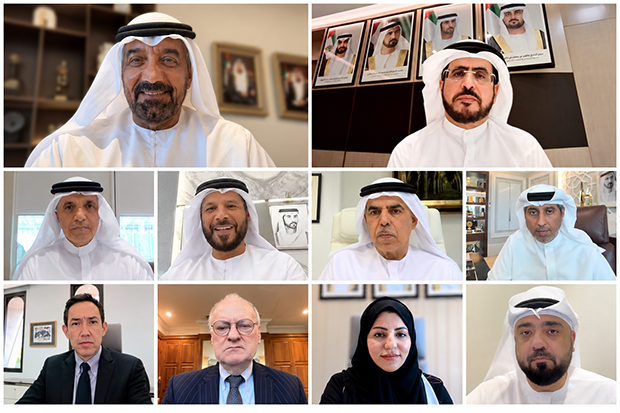
Dubai, UAE, 19 November 2026: HH Sheikh Ahmed bin Saeed Al Maktoum, Chairman of the Dubai Supreme Council of Energy, chaired the council’s 97th meeting, held virtually in the presence of HE Saeed Mohammed Al Tayer, Vice Chairman of the council.
The meeting was attended by HE Ahmed Buti Al Muhairbi, Secretary General of the council, and council members HE Marwan bin Ghalita, Director General of Dubai Municipality; HE Abdulla bin Kalban, Managing Director of Emirates Global Aluminium (EGA); HE Hussain Lootah, CEO of Emirates National Oil Company (ENOC); Juan-Pablo Freile, General Manager of Dubai Petroleum and Dubai Supply Authority (DUSUP); and Muna Alosaimi, CEO of the Strategy and Corporate Governance Sector at Dubai’s Roads and Transport Authority (RTA).
The meeting discussed key measures and initiatives related to the adoption of artificial intelligence (AI), as well as the exchange of expertise and lessons learnt in this field, emphasising AI’s role in enhancing operational efficiency, improving energy management and accelerating innovation across the energy sector.
Drawing on the expertise of Dubai Electricity and Water Authority (DEWA) and Moro Hub (Data Hub Integrated Solutions), a subsidiary of Digital DEWA, DEWA’s digital arm, the council shared key priorities and critical success factors with its affiliated entities to support the effective planning and implementation of AI initiatives. Discussions explored the role of AI in enhancing operational efficiency, improving energy management and accelerating innovation in Dubai’s energy sector. The council also discussed governance of the district cooling market as part of the implementation of a regulatory framework designed to deliver highly efficient cooling services, improve operational processes and ensure affordable prices for customers.
The council approved the implementation plan for the circular economy measurement tool it recently developed. The tool provides an integrated data analysis ecosystem to align existing and future initiatives with approved energy demand management objectives and share the findings with relevant entities across Dubai.
“In line with the vision and directives of His Highness Sheikh Mohammed bin Rashid Al Maktoum, Vice President and Prime Minister of the UAE and Ruler of Dubai, we work to consolidate Dubai’s position as a leading global hub for innovation and the adoption of future-focused solutions in the energy sector. The deployment of AI technologies is a key pillar in developing more efficient and resilient work models, strengthening the ability to anticipate changes and make data-driven decisions. The integration of efforts and expertise among relevant entities also contributes to accelerating the adoption of these technologies,” said Al Tayer.
“The Dubai Supreme Council of Energy is committed to strengthening cooperation and knowledge exchange among entities in the energy sector, while leveraging expertise and successful experiences to accelerate the implementation of initiatives that deliver a sustainable impact. The meeting is an important platform to consolidate efforts and identify priorities for adopting AI technologies, ensuring their effective deployment in line with the energy sector’s needs and aspirations. This supports the Dubai Clean Energy Strategy 2050 and the Dubai Net Zero Carbon Emissions Strategy 2050, while contributing to the establishment of a sustainable energy ecosystem capable of meeting future requirements,” added Al Tayer.
Al Muhairbi said: “We continue to develop regulatory frameworks and performance measurement tools, including the governance of the district cooling market and the implementation of the circular economy measurement tool. This supports efficient resource use, enhances energy demand management and measures the impact of initiatives through clear indicators that help achieve Dubai’s strategic objectives.”