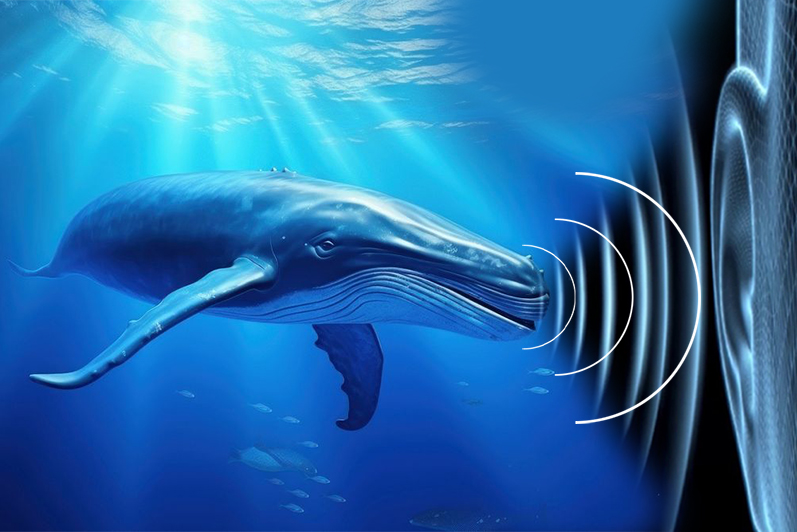
Dubai, 30 June 2025: A report published by Reuters revealed that a long-held human dream — communicating with animals — is gradually shifting from fiction to reality, thanks to rapid advances in artificial intelligence (AI). Scientists around the world are now using sophisticated AI tools to decode animal communication systems, aiming to build a meaningful bridge between humans and other species on the planet.
Understanding the Language of Nature
Animals communicate in complex ways: birds sing, whales call across oceans using low-frequency sounds, elephants produce ground-shaking rumbles, and primates express social cues and warnings through vocalizations. But unlike human languages, animal communication often lacks grammar or symbolic meaning, making it difficult for humans to decipher.
That’s where AI comes in. Using machine learning, scientists can analyze hours of sound recordings and behavioral data to identify patterns, correlations, and possible meanings. Projects like the Earth Species Project and the Cetacean Translation Initiative (CETI) are at the forefront of this field, applying large language models (similar to ChatGPT) to analyze animal vocalizations — such as sperm whale clicks — and investigate whether they follow any syntax-like structure.
Promising Breakthroughs
AI has already led to some significant breakthroughs. It has helped decode warning calls of prairie dogs, detect subtle social signals among elephants, and even predict bee behavior with surprising accuracy based on specific stimuli.
The ultimate goal is not just to “understand” animal communication but to eventually respond in a meaningful way — enabling two-way interaction between humans and animals.
Ethical and Scientific Challenges
However, the path to interspecies communication raises serious ethical and scientific questions. Are we projecting human assumptions onto animal behavior? Does pattern recognition truly equal understanding? Should we even attempt to “talk” to animals?
As researcher Karen Bakker points out, “The goal isn’t to teach animals our language — it’s to listen to theirs and appreciate it in their own context.”
Real-World Benefits
Despite the challenges, the potential benefits are enormous. Understanding animal communication could transform wildlife conservation, allowing humans to detect distress or migration signals early. It could also improve animal welfare in agriculture, or even help us respond to environmental changes through animal behavior.
A New Chapter in Human–Animal Interaction
This won’t look like Dr. Dolittle’s conversations, but with AI as a translator, we may be entering a new era where silence gives way to signals — and technology becomes the voice of the wild.
Whether it’s elephants in the savanna or whales in the deep sea, artificial intelligence may soon help us hear what nature has been saying all along.